Professional towing and roadside assistance available 24/7 across Toronto and the Greater Toronto Area.
Before parking in York Region, check the municipality, the signs and any active winter restrictions. Local streets, Regional roads, private property and provincial highways follow different rules.
This guide covers the main checks, with examples from Richmond Hill, Markham and Vaughan. Official guidance was checked on October 22, 2026.
Some general restrictions apply even without a sign beside your car. Read nearby signs and municipal rules. If you are unsure who manages the road, give the municipal parking office the street name and nearest intersection.
For Regional roads, consult the York Region parking bylaw and amendments.
There is no single overnight parking window for the whole Region. Posted restrictions, permit conditions and weather notices still apply.
For Aurora, Newmarket, East Gwillimbury, Georgina, King or Whitchurch-Stouffville, check that municipality’s current rules. Before an overnight visit, confirm the permit date, vehicle registration and display requirements.
A parking permit does not guarantee permission during winter operations. Check current notices before leaving your vehicle on the street.
Regional roads have separate winter-operation provisions. Arrange an authorized alternative space before snowfall, and do not assume a break in the weather means maintenance has ended.
Remaining behind the wheel or turning on hazard lights does not automatically make a stop legal. On Regional roads, stopping can include a momentary halt, subject to exceptions such as obeying traffic controls or avoiding a conflict with traffic.
Check the sign’s arrows, days and hours before waiting. Keep fire routes, hydrants and sidewalks clear, including any part of the vehicle that overhangs a sidewalk.
At a plaza or condominium, check visitor registration, reserved spaces, customer-only conditions and time limits. Confirm the property owner’s permission.
Property managers should confirm the applicable municipal enforcement process before arranging removal. Ontario’s guidance says consent is generally required for towing unless police or an authorized official initiate it.
See Norman’s private-property towing guide for the records and information to gather.
Ontario’s restricted tow zones govern highway towing arrangements. They are separate from municipal parking restrictions and cover designated highway sections.
Check your exact location against Ontario’s current tow-zone information before independently booking a pickup.
Give the highway, direction, nearest exit and whether you are in a lane or on the shoulder. Follow police and dispatch instructions. Our Ontario tow-zone guide includes a pickup-information checklist.
If you cannot confirm a tow and suspect theft, contact police. York Regional Police lists 1-866-876-5423 for non-emergency assistance. Call 911 for an emergency.
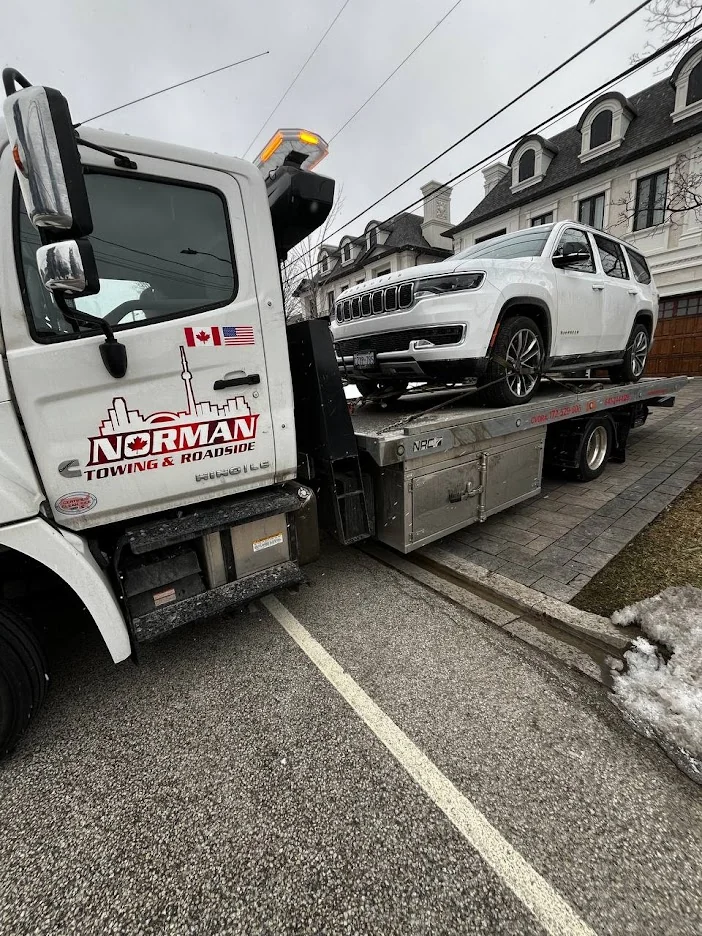
Call Norman Towing at (647) 244-1129 for roadside assistance across Toronto and the GTA. Share your exact location, vehicle details and symptoms so the team can discuss assistance, availability and pricing.
If a parking restriction is approaching, notify the property manager or parking office. Requesting a tow does not automatically grant permission to remain. For a restricted provincial tow zone, follow the official dispatch instructions above.
One call is all it takes. We're ready to assist you 24/7.