Professional towing and roadside assistance available 24/7 across Toronto and the Greater Toronto Area.
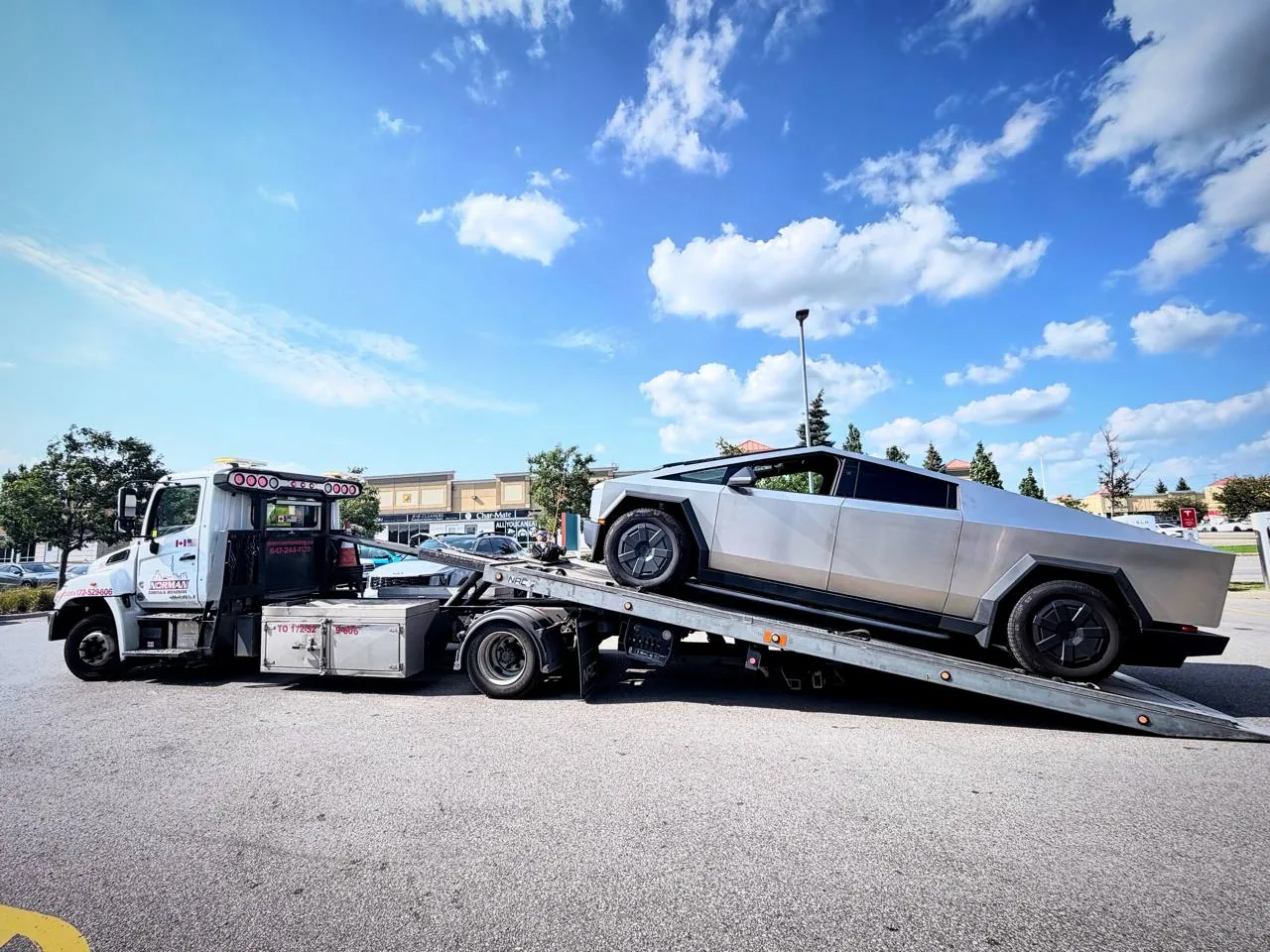
Electric vehicles can be towed, but the transport method must follow the manufacturer's instructions for the specific model and year. Flatbed towing is commonly recommended because it carries the entire vehicle with its wheels off the road. Loading procedures and approved alternatives vary between vehicles.
Whether your EV has run out of charge, developed a fault or become stranded in a parking garage, the first step is to explain the vehicle's condition and location when requesting help.
For drivers in Toronto and the Greater Toronto Area, this guide covers towing methods, battery problems, pickup preparation and the questions to ask before arranging transport.
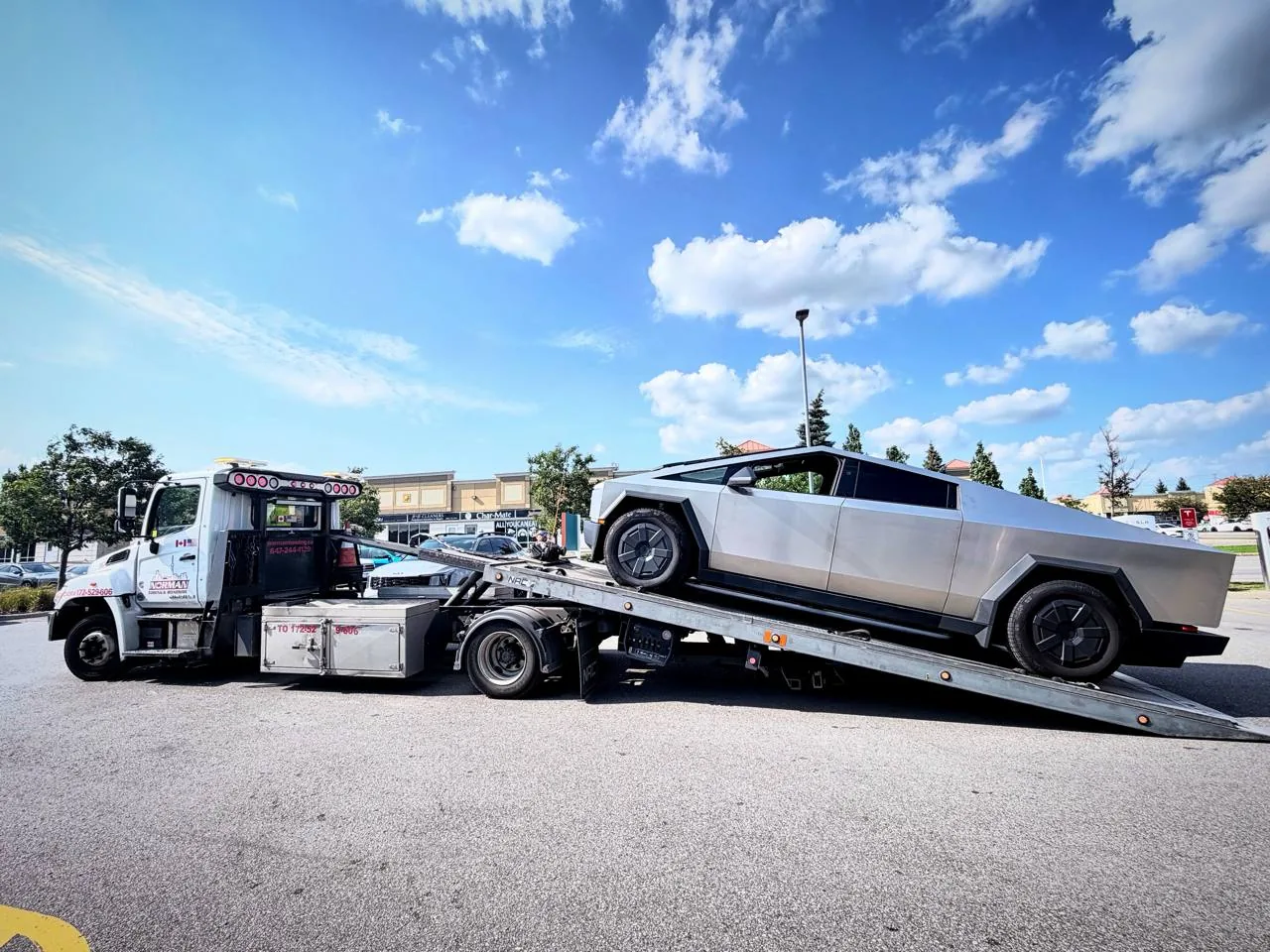
An EV's wheels may remain mechanically connected to its electric motor even when the vehicle is switched off. Towing with the wrong wheels turning on the road can damage the vehicle. The correct procedure depends on its drivetrain and manufacturer instructions, as explained in NHTSA's electric and hybrid vehicle guidance.
This is why an electric car should not automatically be treated like another vehicle that looks similar. Two SUVs can have different transport requirements, even if both are electric.
Tell dispatch the make, model and year. Also explain whether the vehicle powers on, can shift out of Park, has wheel damage or displays a warning message.
A flatbed is often the recommended option, but your vehicle's owner's manual determines the correct method.
The Ford Mustang Mach-E transport instructions, for example, specify keeping every wheel off the ground and describe flatbed or wheel-lift-and-dolly equipment. Kia's EV6 towing instructions also recommend dollies or a flatbed and warn against allowing the driven wheels to turn on the road.
Tesla's Model Y transport instructions recommend a flatbed or comparable transporter and require all four wheels to remain off the ground during transport.
Requirements are not identical across manufacturers. The 2025 Hyundai KONA Electric towing instructions permit a particular arrangement with the front wheels raised and the rear wheels on the ground. That exception should never be assumed to apply to another EV.
The practical takeaway: request transport that follows your exact vehicle's instructions. Confirming the right equipment before dispatch helps avoid an unsuitable truck arriving.
Norman Towing's flatbed towing service includes electric vehicle transport in Toronto and the GTA.
Electric vehicle towing involves far more than Tesla. When requesting help, use the full model name so the towing provider can check the correct transport instructions. Examples of battery-electric vehicles include:
These are model examples, not interchangeable towing instructions. Tell dispatch the year, trim and drivetrain where known. A hybrid or plug-in hybrid version may need a different procedure from a battery-electric model. Vehicle dimensions, weight, condition and access also need to be assessed before suitable equipment is confirmed.
No. A feature called "Tow Mode" does not automatically permit road towing.
On the Tesla Model Y, Tow Mode is intended for limited movement during loading or repositioning. It is not permission to tow the vehicle down the road with its wheels turning. Other vehicles may use different names and procedures, so check the relevant manual.
A depleted driving battery and a failed low-voltage battery are different problems. Explaining what happened helps determine the appropriate assistance.
The high-voltage traction battery supplies energy for driving. A separate low-voltage battery powers other vehicle systems. The traction battery cannot be restored with an ordinary jump-start. Some low-voltage battery problems can be addressed using the manufacturer's approved jump-start procedure.
If the vehicle has simply run out of driving range, transport to a suitable charger may be appropriate. Confirm that the charger works with your vehicle and that any required adapter is available.
Recovery can involve more than reaching a charging station. Tesla's Model Y guidance for running out of range explains that the vehicle may need external support for its low-voltage system before charging can begin. It also advises positioning the vehicle within cable reach and confirming that charging starts before the tow provider leaves.
Avoid assuming that every vehicle showing a blank screen only needs a charge. Tell dispatch about warning messages, loss of power or other symptoms.
Have the following details ready:
Keep your key, key card or other required access method available. If you can safely access the owner's manual, have the transport instructions ready for the operator.
Clear information at booking helps the towing provider assess the pickup and explain any equipment or access requirements.
An underground pickup needs an access assessment before equipment is dispatched.
For a Toronto condo garage, office parking structure or shopping centre, provide the posted entrance clearance and the level where the vehicle is parked. Mention narrow ramps, security gates and anything blocking access.
Ask whether the provider can handle the recovery from that location and how the vehicle will reach the transport truck. Sending only the building's street address may leave important access details unresolved.
Also confirm whether building security must provide entry or whether someone needs to meet the operator at the garage entrance.
A damaged EV needs a different assessment from a vehicle that has simply run out of charge.
If you see smoke, flames or sparks, move away from the vehicle and call 911. Tell emergency responders that it is electric. Avoid exposed wiring, damaged electrical components and leaking fluids.
A damaged high-voltage battery can present an immediate or delayed fire risk. Inform the towing provider about any collision, flooding or suspected battery damage so the appropriate transport and destination can be assessed. Do not attempt high-voltage repairs yourself. See NHTSA's electric and hybrid vehicle emergency guidance for more information.
The cost depends on the pickup, vehicle condition, required equipment and destination. A straightforward pickup and a restricted-access recovery can involve different amounts of work.
Before authorizing the tow, ask for a written estimate explaining:
Confirm the destination and ask what circumstances could change the estimate. For more questions to ask, read Norman Towing's Toronto towing quote checklist.
It depends on the truck's equipment and the vehicle's approved transport method. A suitably equipped flatbed is a common option. A wheel-lift arrangement should only be used when it meets the manufacturer's requirements, including dollies where required.
No. Neutral alone does not establish that road towing is permitted. The vehicle's transport instructions still determine which wheels must be raised and how it should be loaded.
Recovery may still be possible using appropriate equipment. Tesla's Model Y instructions, for example, describe using tire skates or self-loading dollies when Tow Mode is unavailable. Tell dispatch that the wheels are locked before the truck is sent.
That depends on why it stopped. A charger may be suitable after running out of range. A fault, collision or suspected battery damage requires a different assessment. Agree on the destination before loading, and confirm that the receiving location can accept the vehicle.
No. A Hyundai IONIQ 5, Kia EV6, Ford Mustang Mach-E, Chevrolet Bolt EV, Nissan LEAF and Volkswagen ID.4 should each be assessed using the instructions for that specific model and year. Do not transfer a Tow Mode setting, wheel-lift arrangement or loading procedure from one EV to another.
Norman Towing offers 24/7 flatbed towing for electric vehicles in Toronto and the GTA. Call (647) 244-1129 with your vehicle's make, model, year, location and condition to discuss the pickup and request a quote.
You can also request a service online. Include any garage restrictions, power issues and your preferred destination so the team has the information needed to assess your request.
One call is all it takes. We're ready to assist you 24/7.